

3D composite geonet is made by composited geotextile(geofabric) and geonet. The geotextile is non-woven in long fiber style, which is also produced by oursleves. The making process is that extrude diamond mesh and biaxially oriented square mesh composite, spot weld and hot compress into a stable three-dimensional network structure.
Barrier and filtration function
The fiber and mulch film of the drainage network can filter fine particles, prevent soil particles from being washed away, and prevent soil from infiltrating downwards to maintain soil stability.
Excellent performance
The material has high strength, high permeability and high drainage capacity. It can quickly guide water to the drainage layer and accelerate water drainage, effectively reducing the water level and pressure in the soil.
Easy to construct and maintain
The installation and maintenance of 3D composite geonet are very simple, The surface to be covered can be nailed firmly with several fixed points. In terms of maintenance, only a simple cleaning is needed By washing and inspecting, the 3D composite geonet can be kept in good condition.
Corrosion and aging resistance
Has the characteristics of corrosion resistance and aging resistance. After years of hard work When used, the 3D composite geonet will not deteriorate due to exposure to air and will not change due to exposure to sunlight. This enables the 3D composite geonet to maintain its original strength and flexibility for a long time.


Experienced team
The company has a team of experienced engineers and architects who work on various projects.

Competitive pricing
The company offers competitive pricing for their services and materials.

Customization
The company offers customization options for their products to meet customers' specific needs.
 24H Online Service
Strong customer service
The company has received positive reviews for its customer service and responsiveness to clients' needs.
Material of 3D composite geonet
It is made of HDPE polymer extruded into a three-dimensional network structure. It is made of a unique biaxial or triaxial geonet with geotextiles adhered to both sides can bear higher compressing load in construction and remaiin the certain thickness, provide good water conductivity.
Before laying the three-dimensional geonet, the slope needs to be leveled. The ground will be flat after paving, so the slope must be leveled before paving. Make 3D composite geonets work effectively.
In order to enhance the stability of the slope, key works - trenching - were carried out on the top and outside of the slope to ensure the effectiveness of the excavation work. Carefully dig the trench into a perfect rectangle to ensure smooth subsequent filling.
How many U-shaped steel wires need to be used for fixation can be determined according to the shape and size of the slope. For larger slopes, more U-shaped lines can be used. Evenly distribute the U-shaped iron wire in all corners and edges to ensure uniformity and firmness of fixation.
Use high quality soil and gravel as fill material. Pour the soil and gravel evenly into the trench, then compact with a shovel and tamper to eliminate voids and air bubbles. The filler can form a close connection with the trench wall, geonet and slope, increasing the strength and stability of the entire structure.
Mainly used in railways, highways, tunnels, municipal projects, rivers, reservoirs, dams, slope protection, Remarkable results have been achieved in landfill drainage, roadbed and road drainage, retaining wall rear wall drainage, garden and sports ground drainage, etc.
Performance of 3D Composite Geonet

Excellent drainage function, can withstand high pressure loads for a long time, and has high tensile and shear strength.

Reduce the mesh layer of geotextile embedded in the geonet core, which can protect the long-term stability of water conductivity.

The pressure resistance is much greater than that of ordinary drainage geonets.

The 3D composite geonet for drainage can withstand a compressive load of more than 20Kpa.
• Stabilizes weathering slopes
• No maintenance needed
• Used with hydramulching on steep slopes
• An integrated and robust solution
• Open structure encourages fast vegetation growth
• Follows contours of uneven slopes
• Light and flexible
• High UV resistance
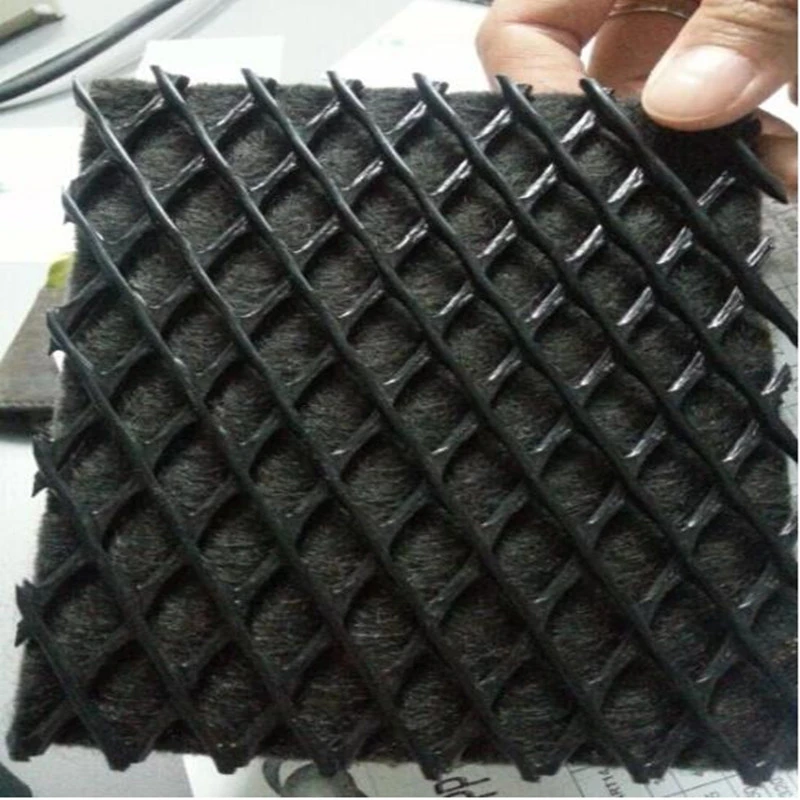
Plastic Three-Dimensional Erosion Control Mat Specifications:
1. Color: black, green or as request.
2. Width: 1m, 1.5m, 2m.
3. Length: 30m, 40m, 50m or as request.
Technical Data of Plastic Three-Dimensional Erosion Control Mat GB/T 18744-2002
|
Items |
EM2 |
EM3 |
EM4 |
EM5 |
|
Mass g/m2 |
≥220 |
≥260 |
≥350 |
≥430 |
|
Thickness mm |
≥10 |
≥12 |
≥14 |
≥16 |
|
Width deviation m |
+0.1 |
0 Length deviation m+1
0 Longitudinal Tensile Strength kN/m≥8.0≥1.4≥2.0≥3.2Transversal Tensile Strength kN/m≥8.0≥1.4≥2.0≥3.2
Soft foundation treatment,
Foundation reinforcement,
Slopes protection,
Abutment reinforcement,
Marine embankment protection,
Reservoir foundation reinforcement.

When Choosing a 3D Composite Geonet
When choosing a 3D composite geonet, there are several factors to consider:

Material
Composite geonets can be made from a variety of materials such as high-density polyethylene (HDPE), polyester, or polypropylene. The choice of material will depend on the specific application and environmental factors such as temperature, chemical resistance, and UV resistance.

Geotextile
The geotextile used in the composite geonet should be selected based on its physical and mechanical properties such as puncture resistance, tensile strength, and filtration properties.

Thickness
The thickness of the composite geonet will depend on the required drainage capacity and the load-bearing capacity needed for the application.

Permeability
The permeability of the composite geonet is a crucial factor to consider. It should be able to facilitate the rapid flow of water while preventing the loss of soil particles.

Cost
The cost of the composite geonet is an important consideration, as it will impact the overall project cost. It's important to find a geonet that offers a good balance between performance and cost-effectiveness.

Supplier support
Choose a reputable supplier that can provide technical support and guidance throughout the selection, installation, and maintenance process. A good supplier should be able to provide product testing, quality assurance, and field services.


Q: What is the 3D Composite Geonet?
Q: Characteristics of three-dimensional geocomposite drainage network
Q: What is a geonet made of?
Q: What are the uses of 3D composite geonet?
Q: What is the drainage capacity of 3D composite geonet?
Q: What are the properties of 3D Composite Geonet?
Q: What is the shape of apertures in geonets?
Q: What is the difference between geotextile and geonet?
Q: What is the purpose of a geonet?
Q: What is the thickness of geonet?
Q: What is geo composite use for?
Q: Is 3D composite geonet environmentally friendly?
Q: What is the function of the geonet?
Q: What are geosynthetics used for?
Q: What are the different geosynthetics?
Q: Is geosynthetics made from polymers?
Q: What are four major applications of geosynthetics?
Q: Compressive performance of 3D composite geonet?
Q: Laying of 3D composite geonet
Q: The difference between 3D composite geonets
We're known as one of the most professional 3d composite geonet manufacturers and suppliers in China. Please rest assured to buy high quality 3d composite geonet made in China here from our factory. For price consultation, contact us.
HDPE 3D Salt Barrier Drainage Geonet, 3d Geonet Black Drainage Mats, 3D Composite Drainage Geonet(0/10)

