
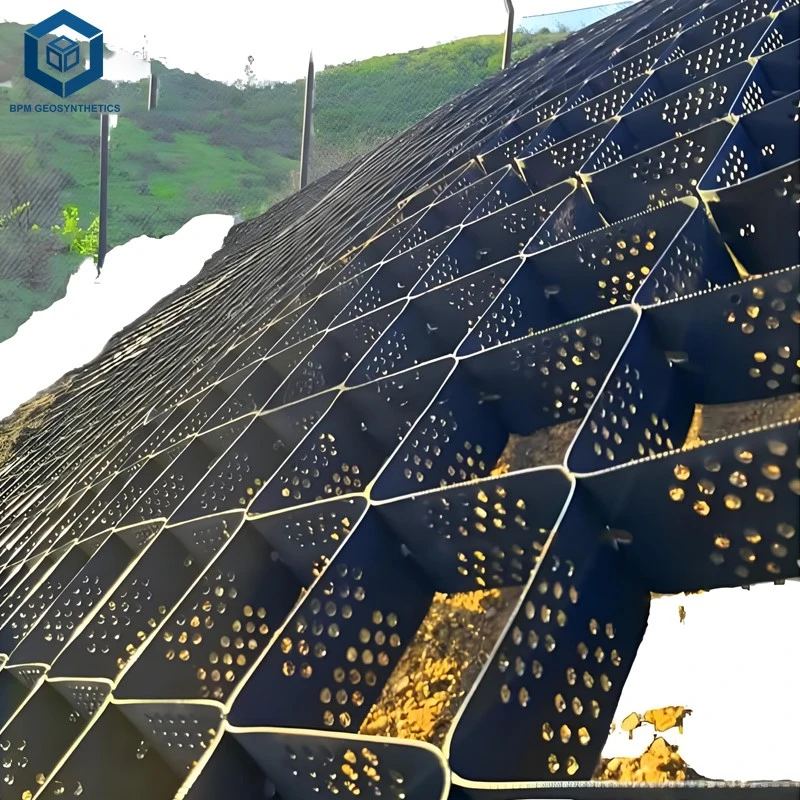
Geocells, also known as cellular confinement systems, are three-dimensional, honeycomb-like structures made from high-density polyethylene (HDPE) or other polymeric materials. They are widely used in civil engineering and construction for soil stabilization, erosion control, and load support. Here are some key functions and benefits of geocells:
1. Soil Stabilization: Geocells confine and stabilize soil particles, preventing lateral displacement and enhancing the load-bearing capacity of the ground. This is particularly useful in weak or loose soils.
2. Erosion Control: By holding soil in place, geocells reduce the risk of erosion caused by wind, water, or other environmental factors. They are often used on slopes, riverbanks, and coastal areas.
3. Load Support: Geocells distribute loads over a wider area, reducing pressure on the underlying soil. This makes them ideal for road construction, parking areas, and other surfaces that need to support heavy loads.
4. Flexibility and Durability: The flexible nature of geocells allows them to conform to the terrain, providing a stable base even on uneven surfaces. They are also resistant to UV radiation, chemicals, and biological degradation, ensuring long-term performance.
5. Environmental Benefits: Geocells can be filled with local materials, reducing the need for imported fill and minimizing the environmental impact. They also promote vegetation growth, which further stabilizes the soil and enhances the ecosystem.
6. Cost-Effectiveness: By improving the performance of local materials and reducing the need for extensive excavation and replacement of poor soils, geocells can significantly lower construction costs.
Overall, geocells are a versatile and effective solution for a wide range of geotechnical and environmental challenges, providing both structural stability and ecological benefits.


