


Products Description
HDPE is a type of plastic known for its excellent chemical resistance, high strength, and durability. It is widely used in geomembrane liners due to its ability to withstand harsh environmental conditions, including exposure to chemicals, UV radiation, and mechanical stress.
The geomembrane liner is textured, meaning it has a pattern or surface design that provides enhanced friction and grip. The texture helps improve the liner's interface with the subgrade or other materials, reducing the potential for slippage or movement. The textured surface also increases the liner's resistance to punctures and enhances its overall stability.
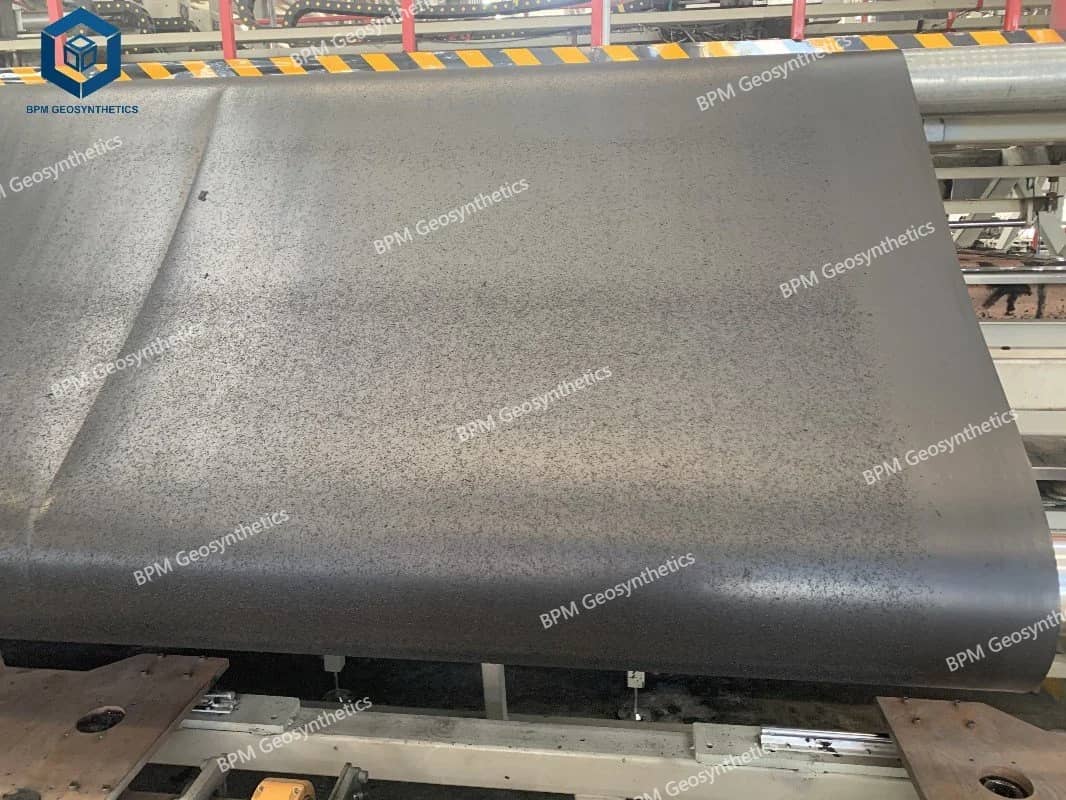
The liner has a thickness of 1.5mm, which indicates the material's overall thickness. This thickness is often chosen based on the specific requirements of the project, considering factors such as durability, chemical resistance, and the anticipated load or stress the liner will experience.
Geomembrane liners are typically manufactured in large rolls and are installed by trained professionals. They act as a barrier to prevent the migration of liquids, gases, or contaminants into or out of a specific area, ensuring environmental protection and containment. The choice of a 1.5mm textured HDPE geomembrane liner will depend on the specific requirements of the project, including the anticipated stress levels, chemical exposure, and the desired lifespan of the liner.
Application
Textured HDPE geomembrane liners have a wide range of applications in various industries and environmental protection projects. Here are some common applications:
1. Landfill Liners: Geomembrane liners are commonly used in landfill construction to create a barrier between the waste material and the surrounding environment. The textured surface of the HDPE liner helps to improve stability, reduce slippage, and enhance the liner's resistance to punctures and tears.
2. Pond and Reservoir Liners: Geomembrane liners are used to line ponds, reservoirs, and other water containment structures. The textured surface helps to reduce slippage and provides a stable foundation for the liner. It prevents seepage and leakage of water, ensuring effective water storage and retention.

3. Mining Containment: In mining operations, geomembrane liners are used to line tailings ponds, heap leach pads, and other containment structures. The liner prevents the release of potentially harmful chemicals and contaminants into the surrounding environment, protecting groundwater and soil quality.
4. Wastewater Treatment Plants: Geomembrane liners are used in wastewater treatment plants to line clarifiers, settling ponds, and other containment structures. The liners help to prevent leaks and seepage, ensuring that treated wastewater is properly contained and does not contaminate the surrounding areas.

5. Agricultural Applications: Textured HDPE geomembrane liners are used in agricultural applications for lining irrigation canals, reservoirs, and agricultural ponds. They help to prevent water seepage and retain water for efficient irrigation, reducing water loss and improving overall water management.
6. Environmental Protection Projects: Geomembrane liners are used in various environmental protection projects, such as hazardous waste containment, oil and gas exploration sites, and remediation of contaminated sites. The liners act as a barrier to prevent the migration of pollutants, ensuring proper containment and protection of the environment.

Technical data

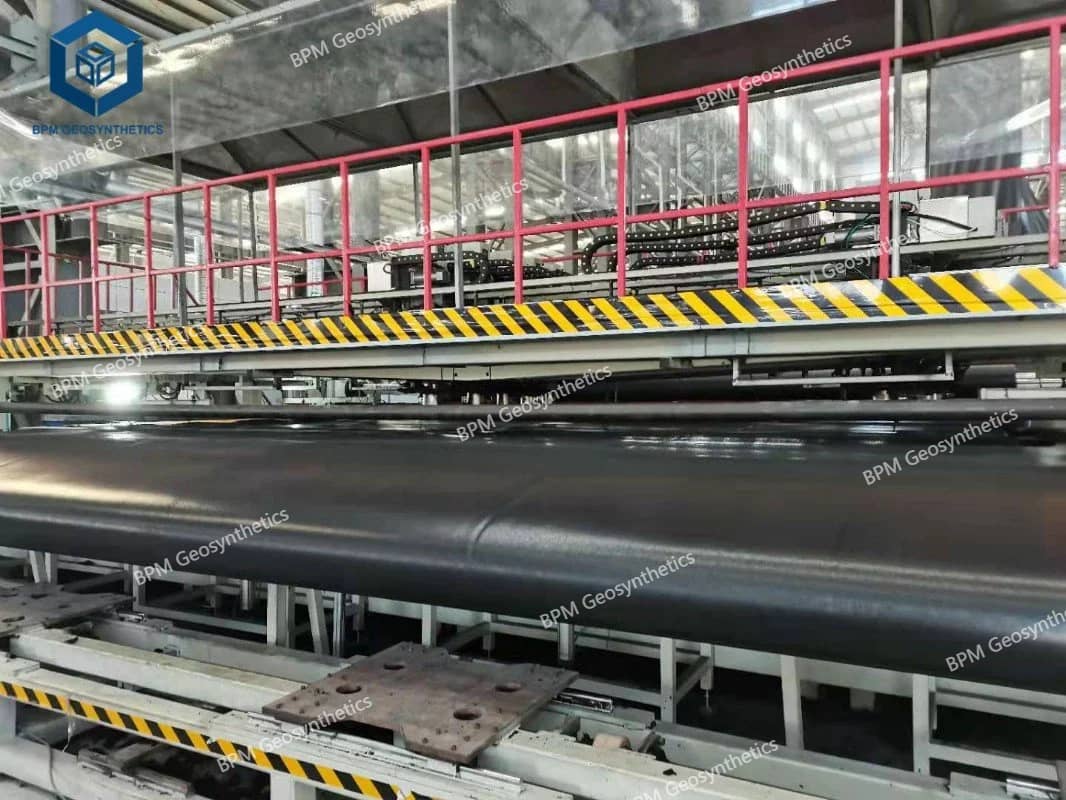
The production process of a 1.5mm textured HDPE geomembrane liner involves several steps. Here's a general overview of the process:
1. Raw Material Preparation: High-Density Polyethylene (HDPE) resin is typically used as the base material for geomembrane liners. The resin is received in pellet form and undergoes various quality checks to ensure it meets the required specifications.
2. Extrusion: The HDPE resin pellets are then fed into an extruder, which melts the resin and forms it into a continuous, flat sheet. The extruder consists of a heated barrel and a screw that pushes the molten resin through a die, shaping it into the desired thickness and width.
3. Texturing: Once the HDPE sheet is formed, it passes through a texturing unit. This unit applies a pattern or texture to one or both sides of the sheet. The texture enhances friction and grip, improving the liner's interface with the subgrade and reducing the chances of slippage.
4. Cooling and Sizing: After texturing, the sheet goes through a cooling process to solidify the molten HDPE and stabilize its dimensions. It may pass through a series of cooling rollers or a water bath to rapidly cool the material. During this stage, the liner's width and thickness are also carefully monitored and adjusted as needed.
5. Quality Control: The textured HDPE geomembrane liner is then subjected to rigorous quality control tests to ensure it meets the required standards. These tests may include measuring thickness, tensile strength, tear resistance, puncture resistance, and other relevant properties.
6. Rolling and Packaging: Once the geomembrane liner passes all quality control tests, it is rolled onto large spools or reels. The liner is carefully wound to prevent damage during transportation and storage. It may be packaged in protective wrapping to safeguard it from exposure to UV light and other potential hazards.
It's important to note that specific production processes may vary depending on the manufacturer, equipment used, and the desired properties of the geomembrane liner. Manufacturers may also incorporate additional steps, such as adding UV stabilizers or other additives to enhance the liner's performance and longevity.
Contact information

|
Properties |
Test Method |
Test Value |
|||||||||
|
|
|
0.5 mm |
0.75mm |
1.00 mm |
1.25 mm |
1.50 mm |
2.00 mm |
2.50 mm |
3.00 mm |
||
|
Maximum Deviation of thickness |
|
-15% |
-15% |
-15% |
-15% |
-15% |
-15% |
-15% |
-15% |
||
|
Density (min. ave.) |
D 1505/D792 |
0.940 g/cc |
0.940 g/cc
|
0.940 g/cc |
0.940 g/cc |
0.940 g/cc |
0.940 g/cc |
0.940 g/cc |
0.940 g/cc |
||
|
Tensile Properties(min.ave) |
Yield strength
Break strength |
D6693 |
8N/mm |
11 N/mm |
15 N/mm |
18 N/mm |
22 N/mm |
29 N/mm |
37 N/mm |
44 N/mm |
|
|
|
|
|
14N/mm |
20N/mm
|
27 N/mm |
33 N/mm |
40 N/mm |
53N/mm |
67 N/mm |
80 N/mm |
|
|
Yield elongation |
|
12% |
12% |
12% |
12% |
12% |
12% |
12% |
12% |
||
|
Break elongation |
|
700% |
700% |
700% |
700% |
700% |
700% |
700% |
700% |
||
|
Tear Resistance (min. ave.) |
D 1004 |
63 N |
93 N |
125 N |
156 N |
187 N |
249 N |
311 N |
374 N |
||
|
Puncture Resistance (min. ave.) |
D 4833 |
160N |
240N |
320 N |
400 N |
480 N |
640 N |
800 N |
960 N |
||
|
Carbon Black Content (range) |
D 4218 |
2.0-3.0 % |
2.0-3.0 % |
2.0-3.0 % |
2.0-3.0 % |
2.0-3.0 % |
2.0-3.0 % |
2.0-3.0 % |
2.0-3.0 % |
||
|
Oxidative Induction Time (OIT) (min.ave.) Standard OIT |
D 3895 |
100 min. |
100 min. |
100 min. |
100 min. |
100 min. |
100 min. |
100 min. |
100 min. |
||
|
Oven Aging at 85°C Standard OIT (min. ave.) - % retained after 90 days |
D 5721 D 3895 |
55% |
55% |
55% |
55% |
55% |
55% |
55% |
55% |
||
|
UV Resistance High Pressure OIT (min. ave.) - % retained after 1600 hrs |
D 3895 D 5885 |
50% |
50% |
50% |
50% |
50% |
50% |
50% |
50% |
||
Hot Tags: hdpe textured geomembrane manufacturer 1.5mm price, China hdpe textured geomembrane manufacturer 1.5mm price manufactures, suppliers, factory, 0 5mm HDPE Liner Sheet for Fish Farming Pond, HDPE Liner 1 5mm Heap Leach, HDPE Liner For Heap Leach Pads, HDPE Lining 1000 Micron, Landfill Geomembrane, HDPE Liner For Artificial Lake


