


What is the creep behavior of LLDPE Geomembrane?
As a supplier of LLDPE geomembranes, I've witnessed firsthand the growing demand for these versatile materials in various industries, from environmental protection to civil engineering. One of the most critical aspects that often comes under scrutiny is the creep behavior of LLDPE geomembranes. In this blog post, I'll delve into what creep is, why it matters, and how it affects the performance of LLDPE geomembranes.
Understanding Creep
Creep is a time - dependent deformation that occurs in materials when they are subjected to a constant load over an extended period. In the context of LLDPE geomembranes, creep can manifest as a slow, continuous stretching or deformation under the influence of factors such as the weight of overlying materials, hydrostatic pressure, or temperature variations.
When a LLDPE geomembrane is installed in a landfill, for example, it is subjected to the weight of the waste materials above it. Over time, this constant load can cause the geomembrane to gradually stretch and deform. Similarly, in a reservoir application, the hydrostatic pressure exerted by the water can lead to creep in the geomembrane.
Factors Affecting Creep Behavior
Several factors influence the creep behavior of LLDPE geomembranes.
Temperature is a significant factor. Higher temperatures generally accelerate the creep process. At elevated temperatures, the molecular chains in the LLDPE become more mobile, making it easier for the material to deform under load. For instance, in hot desert regions, the high ambient temperatures can cause LLDPE geomembranes to creep at a faster rate compared to cooler climates.

Stress Level also plays a crucial role. The higher the stress applied to the geomembrane, the more likely it is to experience significant creep. If a geomembrane is installed in a situation where it is subjected to excessive weight or pressure, it will deform more rapidly.
Material Properties of the LLDPE itself are important. The density, molecular weight distribution, and degree of crystallinity of the LLDPE can all affect its creep resistance. Geomembranes made from high - quality LLDPE with a more favorable molecular structure tend to have better creep resistance.
Measuring Creep
To assess the creep behavior of LLDPE geomembranes, various testing methods are employed. One common method is the long - term creep test, where a sample of the geomembrane is subjected to a constant load in a controlled environment for an extended period, often several thousand hours. During this time, the deformation of the sample is measured at regular intervals.
The results of these tests are used to generate creep curves, which show the relationship between time, stress, and strain. These curves can be used to predict the long - term performance of the geomembrane under different loading conditions. For example, engineers can use the creep curves to estimate how much a geomembrane will deform over the expected service life of a landfill or a reservoir.
Implications of Creep for LLDPE Geomembrane Applications
The creep behavior of LLDPE geomembranes has several implications for their applications.
In landfill liners, excessive creep can lead to the formation of wrinkles or folds in the geomembrane. These wrinkles can create areas where water can accumulate, increasing the risk of leakage and environmental contamination. Additionally, if the geomembrane creeps too much, it may lose its integrity and fail to provide an effective barrier against the migration of leachate.
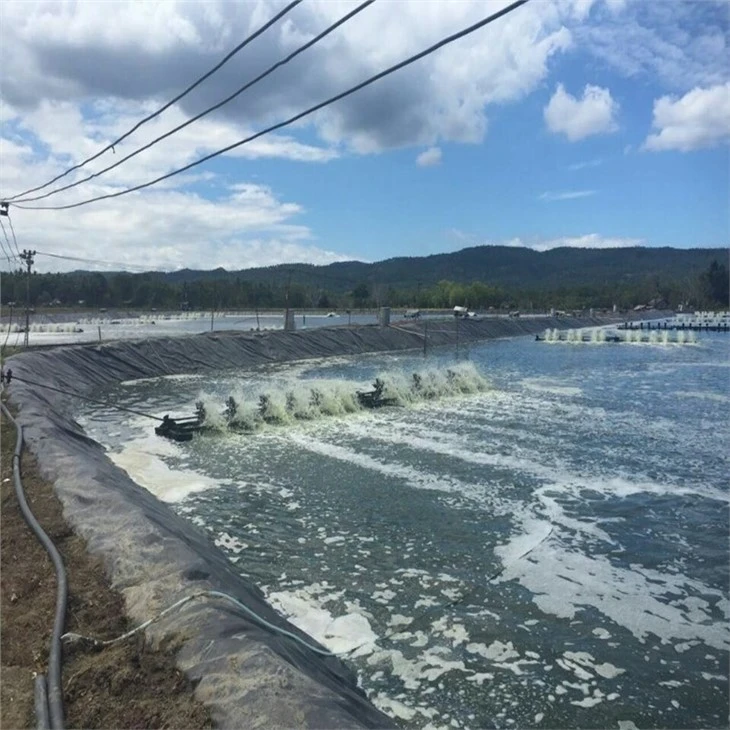
In pond and reservoir liners, creep can cause the geomembrane to stretch and thin in some areas. This thinning can reduce the puncture resistance of the geomembrane, making it more susceptible to damage from rocks or other sharp objects. Moreover, if the creep is uneven, it can lead to uneven settlement of the liner, which may also compromise its performance.
Mitigating Creep
As a supplier, we understand the importance of providing geomembranes with good creep resistance. To mitigate creep, we focus on using high - quality LLDPE resins with optimal material properties. Additionally, we offer geomembranes with appropriate thicknesses and reinforcement options.
For example, some of our LLDPE Polyethylene Geomembrane Liner products are designed with a reinforced structure that enhances their creep resistance. The reinforcement can be in the form of a woven or non - woven fabric that is laminated to the LLDPE layer. This reinforcement helps to distribute the load more evenly across the geomembrane, reducing the likelihood of excessive creep.
Proper installation is also crucial in minimizing creep. During installation, it is important to ensure that the geomembrane is properly tensioned and that there are no excessive stresses on the material. Our installation guidelines provide detailed instructions on how to install the LLDPE Geomembrane Liner to minimize the risk of creep.
Conclusion
In conclusion, the creep behavior of LLDPE geomembranes is a complex but important aspect of their performance. Understanding the factors that affect creep, measuring it accurately, and taking steps to mitigate it are essential for ensuring the long - term effectiveness of these geomembranes in various applications.
As a leading supplier of LLDPE geomembranes, we are committed to providing high - quality products with excellent creep resistance. Our team of experts is always available to provide technical support and guidance on the selection and installation of our geomembranes.
If you are in the market for LLDPE geomembranes and want to learn more about how our products can meet your specific needs, we encourage you to contact us for a detailed discussion. We look forward to the opportunity to work with you on your next project.
References
- Rowe, R. K. (2005). Geosynthetics in geotechnical and geoenvironmental engineering. CRC Press.
- Koerner, R. M. (2012). Designing with geosynthetics. Pearson.
- ASTM D5262 - 17. Standard Test Method for Determining the Creep Behavior of Geosynthetics.