


Brass is a popular alloy composed primarily of copper and zinc, known for its attractive golden appearance, excellent corrosion resistance, and good machinability. It finds extensive use in various industries, including plumbing, electrical, and decorative applications. As a welding machine supplier, I often receive inquiries from customers about the feasibility of welding brass using our machines. In this blog post, I will delve into the topic of welding brass with a welding machine, exploring the different welding processes, considerations, and challenges involved.
Understanding Brass and Its Welding Characteristics
Before we discuss the welding process, it's essential to understand the properties of brass that can affect the welding outcome. Brass has a relatively low melting point compared to other metals, typically ranging from 900°C to 940°C (1652°F to 1724°F). This low melting point makes it susceptible to overheating and burning during the welding process. Additionally, brass contains zinc, which has a lower boiling point than copper. When heated, zinc can vaporize, leading to the formation of zinc oxide fumes, which are harmful if inhaled.
Another challenge with welding brass is its high thermal conductivity. This means that heat dissipates quickly from the weld area, making it difficult to maintain a consistent temperature and achieve proper fusion. As a result, welding brass requires careful control of the welding parameters and the use of appropriate filler materials.
Welding Processes for Brass
There are several welding processes that can be used to weld brass, each with its own advantages and limitations. The choice of welding process depends on factors such as the thickness of the brass, the joint design, and the desired weld quality. Here are some of the most common welding processes for brass:

Gas Tungsten Arc Welding (GTAW)
Also known as TIG (Tungsten Inert Gas) welding, GTAW is a popular choice for welding brass due to its precise control and high-quality welds. In GTAW, an electric arc is established between a non-consumable tungsten electrode and the workpiece, while an inert gas (usually argon) is used to shield the weld area from atmospheric contamination. A filler rod can be added to the weld pool to provide additional material for the joint.
GTAW is suitable for welding thin to medium-thickness brass sheets and tubes. It allows for excellent control of the heat input, which is crucial for preventing overheating and minimizing the formation of zinc oxide fumes. However, GTAW is a relatively slow process and requires a high level of skill and experience to achieve good results.
Gas Metal Arc Welding (GMAW)
GMAW, also known as MIG (Metal Inert Gas) welding, is a faster and more automated welding process compared to GTAW. In GMAW, a consumable wire electrode is fed through a welding gun, and an electric arc is established between the electrode and the workpiece. An inert gas (usually a mixture of argon and carbon dioxide) is used to shield the weld area.
GMAW is suitable for welding thicker brass sections and can be used for both flat and vertical welding positions. It offers higher deposition rates and is more productive than GTAW. However, GMAW can be more challenging to control, especially when welding thin brass, as it can generate more heat and cause distortion.
Oxy-Fuel Welding
Oxy-fuel welding is a traditional welding process that uses a mixture of oxygen and a fuel gas (such as acetylene) to produce a high-temperature flame. The flame is used to melt the base metal and the filler rod, creating a weld joint. Oxy-fuel welding is relatively inexpensive and can be used for welding a variety of metals, including brass.
Oxy-fuel welding is suitable for welding thick brass sections and can be used for both repair and fabrication work. It allows for good control of the heat input and can be used in situations where electricity is not available. However, oxy-fuel welding requires a high level of skill and experience to achieve good results, and it can produce a lot of heat and fumes.
Considerations for Welding Brass
When welding brass, there are several important considerations to keep in mind to ensure a successful weld:
Pre-Welding Preparation
Proper pre-welding preparation is essential for achieving good weld quality. This includes cleaning the brass surfaces to remove any dirt, oil, or oxide layers. A wire brush or a chemical cleaner can be used to clean the surfaces. Additionally, it's important to fit the parts together properly and secure them in place to prevent movement during the welding process.
Filler Materials
The choice of filler material is crucial for achieving a strong and durable weld joint. When welding brass, it's important to use a filler material that has a similar composition to the base metal. Copper-based filler materials are commonly used for welding brass, as they provide good compatibility and mechanical properties.
Welding Parameters
The welding parameters, such as the welding current, voltage, and travel speed, need to be carefully adjusted to suit the thickness of the brass and the welding process being used. Too much heat can cause the brass to overheat and burn, while too little heat can result in poor fusion and a weak weld joint.
Post-Welding Treatment
After welding, it's important to allow the brass to cool slowly to prevent cracking and distortion. Once the weld has cooled, it can be cleaned and finished to remove any slag or spatter. Depending on the application, the weld may also need to be heat-treated to improve its mechanical properties.
Our Welding Machines for Brass Welding
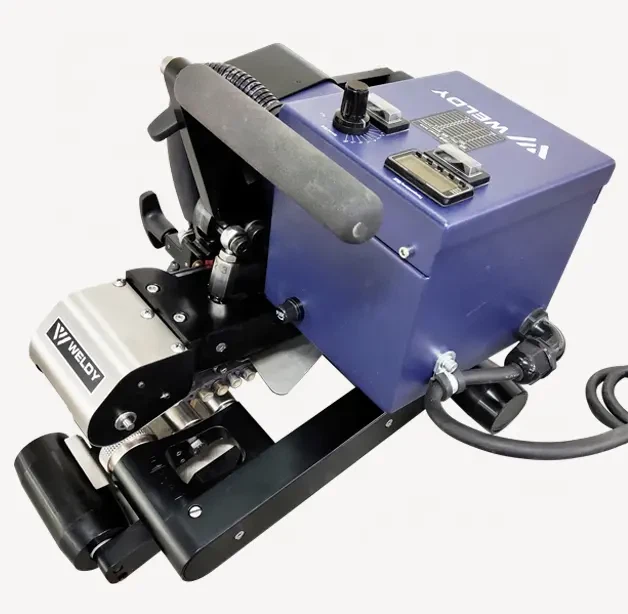
As a welding machine supplier, we offer a range of welding machines that are suitable for welding brass. Our Geomembrane HDPE Welding Machine is a versatile machine that can be used for welding a variety of materials, including brass. It features precise control of the welding parameters, allowing for excellent weld quality and consistency.
Our Agricultural Machinery WELDY Welding Machine For Sale is another option for welding brass. This machine is designed for heavy-duty applications and offers high deposition rates and productivity. It is suitable for welding thick brass sections and can be used in both industrial and agricultural settings.
For smaller-scale brass welding projects, our Pond Liner Welding Machine is a great choice. This machine is compact and portable, making it easy to use in various locations. It offers precise control of the heat input, which is essential for welding thin brass sheets and tubes.
Conclusion
In conclusion, it is possible to weld brass with a welding machine, but it requires careful consideration of the welding process, filler materials, and welding parameters. By choosing the right welding machine and following the proper welding techniques, you can achieve high-quality welds on brass.
If you are interested in purchasing a welding machine for brass welding or have any questions about our products, please feel free to contact us. Our team of experts is available to provide you with the information and support you need to make an informed decision. We look forward to hearing from you and helping you with your welding needs.
References
- ASM Handbook, Volume 6: Welding, Brazing, and Soldering. ASM International, 1993.
- Welding Metallurgy and Weldability of Stainless Steels. John C. Lippold and David J. Kotecki, Wiley, 2005.
- The Welding Institute. Welding of Non-Ferrous Metals. TWI, 2008.